Meet Teens of the Revolution

True Teens of History: Revolutionary Heroes

Meet two brave teens who risked their lives during the war for America’s independence

When most people think of heroes of the American Revolution (1775-1783), icons such as George Washington and Alexander Hamilton usually come to mind. But many of the Americans who stepped up to fight the war for independence were regular teens.

In 1774, many Americans were fed up with the high taxes imposed on the Colonies by Britain’s King George III. A group of representatives met at the First Continental Congress in Philadelphia to challenge British rule. When war broke out in 1775, the leaders met again and formed a Continental Army, naming Washington as its commander.

But who would fight? With half the population of the 13 Colonies under age 17, many young people would have to take part.

Officially, soldiers had to be at least 16 to fight. But some boys as young as 10 joined up, either with their parents’ permission or by hiding their age. Girls aided the cause too, delivering messages across enemy lines and defending and taking care of farms. For some young people, especially those who were poor or enslaved, the war offered an opportunity to forge new lives in a new nation.

These are the stories of two of the many teens who helped fight the American Revolution.
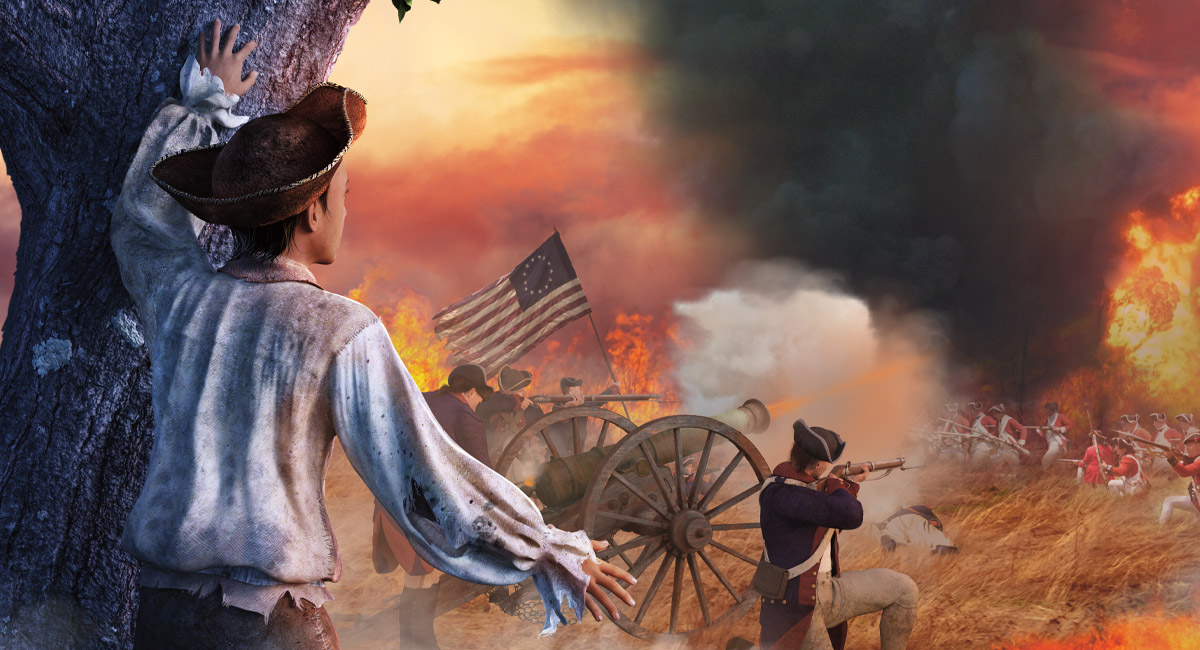
Illustration by Shane Rebenschied; iStockPhoto/Getty Images (Sky, Clouds, Trees); Shutterstock.com (All Other Images)

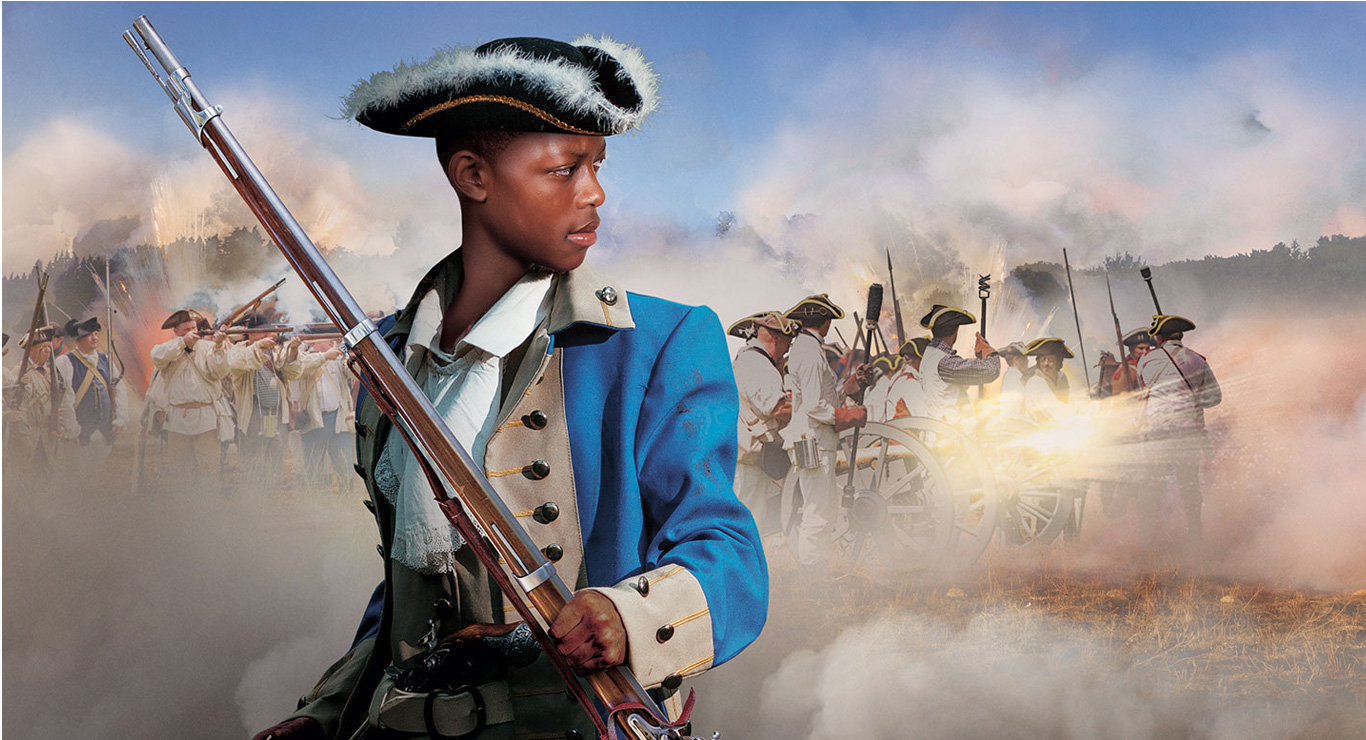
Austin Dabney, 14*

He fought for the nation’s freedom—and his own.

In 1779, Austin Dabney, an enslaved 14-year-old living in Georgia, was sent into battle against the British. Austin’s enslaver didn’t want to fight in the war. So Austin, like many Black people, was forced to serve in his enslaver’s place.

General Washington had been opposed to letting Black men, enslaved or free, join the Continental Army. Many White people feared that once armed, Black troops might revolt against their enslavers. But in 1775, Britain promised freedom to enslaved people who fought against their Patriot enslavers. Worried that many would join the British army, Washington reversed his stance.

Austin was one of more than 5,000 Black people who fought for the Americans. Some fought because they had to, but many others volunteered, hoping to win their freedom. (An estimated 20,000 took up arms for the British.)

Austin was wounded in battle and left with a disability. But after the war, he received better treatment than most Black veterans. He became the only Black veteran to be granted land by the state of Georgia for his bravery. The state also paid for his freedom from his enslaver.

In the South, slavery remained entrenched long after the war. But in the North, the efforts of Black soldiers like Austin helped fuel an abolitionist movement that led to slavery gradually being outlawed there, says Alan Gilbert, author of Black Patriots and Loyalists.

Many Americans thought “it was completely dishonorable to fight [a revolution] for the rights of human beings—life, liberty, and the pursuit of happiness,” Gilbert says, “[yet] deny them to lots of human beings.”

*Most historians think Austin Dabney was born around 1765. But as is the case for many enslaved people, no birth records exist.

Illustration by Shane Rebenschied

Emily Geiger, 18

She outwitted the British to deliver a message.

In July 1781, Emily Geiger, 18, set out on a dangerous mission: to deliver a message from General Nathanael Greene to General Thomas Sumter. Greene’s troops had been fighting the British near Greenville, South Carolina, but were outmatched. Greene thought that if Sumter’s unit could join his, they stood a chance.

Emily, who lived near Greene’s camp, volunteered to deliver the general’s request for help. But on her journey, she was stopped by British soldiers. Fortunately, she had memorized the message. Before she could be searched, Emily tore up the note—and swallowed it.

Unable to find evidence that she was aiding the Continental Army, the British let her go. The next day, she gave the memorized message to Sumter. The two units did join forces—and eventually helped defeat the British in South Carolina.

Emily’s story reflects the important role women and girls played in the Revolution. Many worked as nurses or cooks in soldiers’ camps, or sewed uniforms. Some went undercover as spies or disguised themselves as men to serve in combat.

Says Matthew Skic, of the Museum of the American Revolution in Philadelphia: “Women, even back in 1776, were asserting that ‘all men are created equal’ does indeed apply to them.”

Text-to-Speech